
History of Istanbul, Turkey
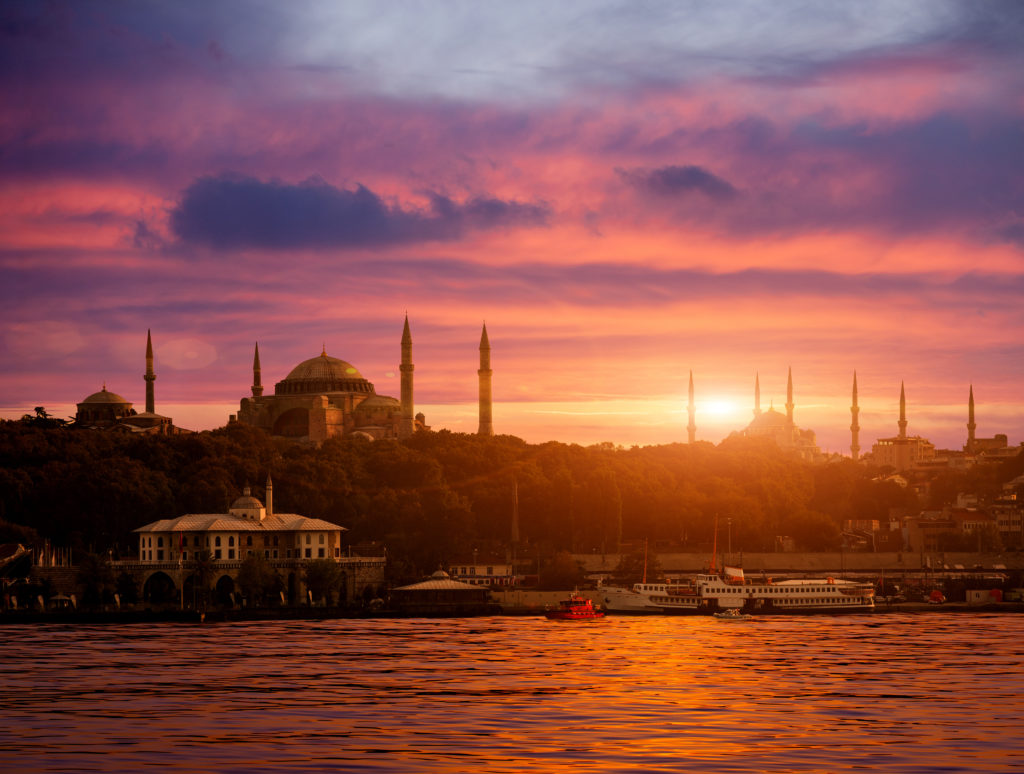
According to legend, the city of Istanbul was founded by Byzas the Megarian in 667 BC. But before forming this settlement, Byzas visited the Oracle of Delphi, requesting advice as to where would be a good location. The Oracle predicted that he would settle his town ‘opposite blind men’. And this is where the history of Istanbul traces back to.
So Byzas went off to find this area and presently arrived at the vacant point of the Golden Horn peninsula, where Topkapi Palace presently stands. He was soon fascinated by the beauty of the area. Hearing of a civilization living on the opposite Asian side, named Chalcadeon (Kadikoy), he felt them to be ill-sighted. How could they have not found and appreciated the wonderfully convenient location just opposite them on the European peninsula? So, the Oracle’s prediction was confirmed, and he so he built his town on the peninsula. So commences the recent history of Istanbul.
Delve deeper into the city’s history with historical Istanbul tour guides here or continue reading below.
 In 512 BC, the city was conquered by the Persian Emperor Darius, until 479 BC, when it was captured by the Spartan king Pausinias. Later, it passed into the hands of Athenian rule. It wasn’t long before the city came under siege again, this time by Philip of Macedon in 340 BC, but the strong fight put up by the Byzantines allowed them to defeat the Macedonians. However, not long after, the son of Philip, Alexander the Great, went on to capture the city in 334 BC. Following his death, the city came under the power of the Romans.
In the year 179 BC, the city was captured by the Rhodian, Pergamonian and Bithinian forces, followed by a brief takeover by Mithritades, the king of Pontus, before returning again to Roman domination. It was the Roman Emperor Septimius Severus who first built the city walls. In 324 AD, Constantine rose to power and during his reign the city was enhanced and new city walls were added, further beautified and enlarged by his successor, Theodosius the Great.
The year 395 historically saw the Roman Empire split in two – to western and eastern Rome, although the Western Roman Empire quickly declined within a hundred years. The powerful Eastern Roman Empire, or Byzantine Empire, choose Istanbul as its capital. However, it came under Arab and Bulgarian rule for a short time, although the city always remained the capital of the Byzantine Empire during these periods. It also suffered from the crusades.
Finally, in 1453, the Ottomans lead by Mehmet II conquered the city and made it their capital, from 1453 until 1922. When the Turkish Republic was established in 1923 by Ataturk, Ankara became the capital. Nevertheless, historic Istanbul remains the commercial and tourist center of the country today.