
Ottoman Cuisine in Turkey
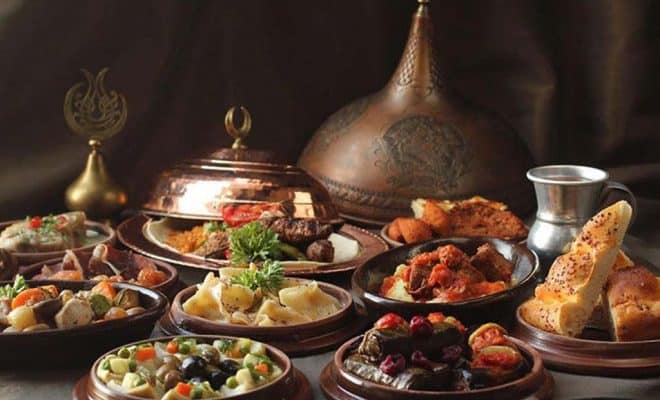
OTTOMAN CUISINE & COOKING
The importance of culinary art for the Ottoman Sultans is evident to every visitor of Topkapi Palace. The huge kitchens were housed in several buildings under ten domes. By the 17th century, some thirteen hundred kitchen staff were housed in the Palace.
Hundreds of cooks, specializing in different categories of dishes such as soups, pilafs (rice), kebabs, vegetables, fish, breads, pastries, candy and helva, syrup and jams and beverages, fed as many as ten thousand people a day and, in addition, sent trays of food to others in the city as a royal favour.
The importance of food is also evident in the structure of the Ottoman military elite, the Janissaries. The commanders of the main divisions were known as the Soupmen, other high ranking officers were the Chief Cook, Scullion, Baker and Pancake Maker, though their function had little to do with these titles. The huge cauldron used to make pilaf had a special symbolic significance for the Janissaries, as the central focus of each division.
The kitchen was also the center of politics, for whenever the Janissaries demanded a change in the Sultan’s Cabinet, or the head of a grand vizier, they would overturn their pilaf cauldron.” Overturning the cauldron”, is an expression still used today to indicate a rebellion in the ranks.
It was in this environment that hundreds of the Sultan’s chefs, who dedicated their lives to their profession, developed and perfected the dishes of the Turkish Cuisine, which was then adopted by the kitchens of the provinces ranging from the Balkans to Southern Russia and reaching North Africa. Istanbul was the capital of the world and had all the prestige, so that its ways were imitated. At the same time, it was supported by an enormous organization and infrastructure which enabled all the treasures of the world to flow into it.
The provinces of the vast Empire were integrated by a system of trade routes with refreshing caravanserais for the weary merchants and security forces. The Spice Road, the most important factor in culinary history, was under the full control of the Sultan. Only the best ingredients were allowed to be traded under the strict standards established by the courts.
Guilds played an important role in development and sustenance of the Cuisine. These included
hunters, fisherman ,cooks, kebab cooks, bakers, butchers, cheese makers and yogurt merchants, pastry chefs, pickle makers and sausage merchants. All of the principal trades were believed to be sacred and each guild traced its patronage to the Prophets and Saints. The guilds prevailed in pricing and quality control. They displayed their products and talents in spectacular floats driven through Istanbul streets during special occasions, such as the circumcision festivities for the Crown Prince or religious holidays.
Following the example of the Palace, all of the grand Ottoman houses boasted elaborate kitchens and competed in preparing feasts for each other as well as the general public. In fact, in each neighborhood, at least one household would open its doors to anyone who happened to stop by for dinner during the holy month of Ramadan, or during the other festive occasions. This is how the traditional Cuisine evolved and spread, even to the most modest corners of the country.
Learn more about Turkish Cuisine:
- Ottoman Cuisine
- Turkish Mezes
- Baklava – Turkish Sweets
- Seafood Dishes
- Turkish Drinks
- Vegetables & Vegetarian Dishes
Book private Ottoman Tours in Istanbul and choose from a range of private guided tours here.